Crafting a memorable and impactful sales kick off
- Category: Sales presentations Sales messaging Tools
Sales kick-offs are a key milestone in the calendar for lots of organisations. They’re the perfect setting to get your key people in a room and inspire them about what’s to come on the sales horizon in the next year. A successful SKO will see team members empowered and energised, ready for a new season of sales. But, getting it wrong risks squandering a huge opportunity. Your sales teams could leave confused, unlikely to take your new messages and ideas out on the road at all.
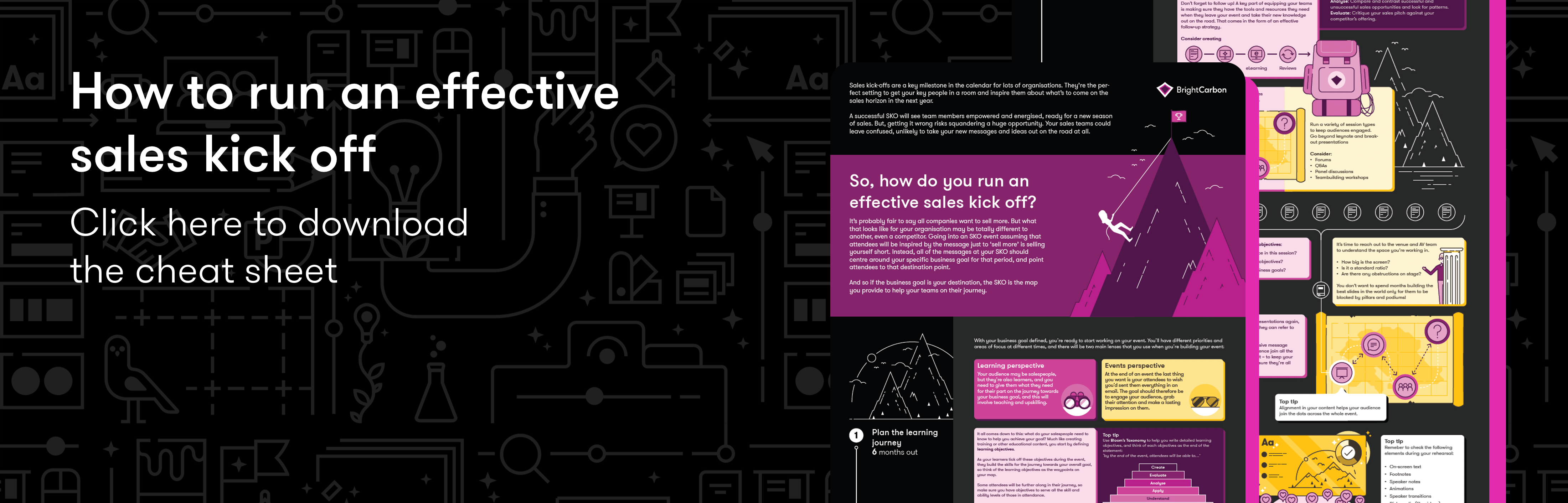
We’ve put together a cheat sheet to help you plan the perfect SKO event, taking your through planning to presenting, and then beyond to effective follow-up.
Here are the highlights to whet your appetite
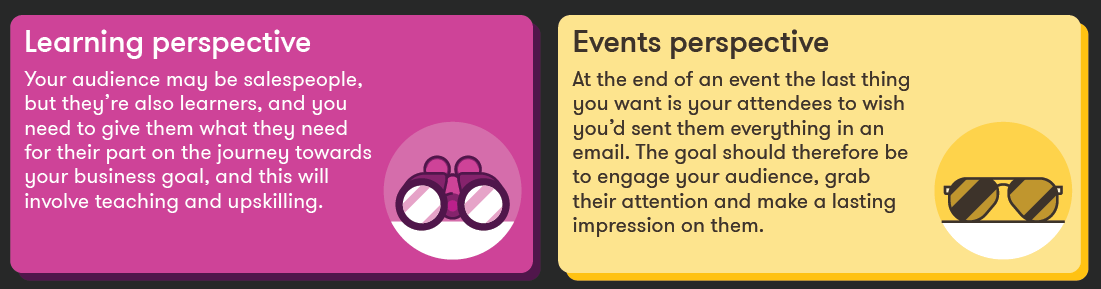
There are two important perspectives when it comes to running an effective Sales Kick Off. You need to think about the learning your audience will need to do, but you also need to remember this is an event – and that means your content needs to make a big – and memorable – impact.
Your Sales Kick Off timeline:
- 6 months out – plan your learning journey: What are the key learnings you want attendees to have at the end of the session? Define them early and this will act as the north star for content creators.
- 3 months out – set your agenda: Assign speakers and sessions, keep the format varied, and make sure all your content ladders up to your overall business and learning goals.
- 2 months out – build your content: It may feel like a long time to build your slides, but a lot of this time
should be spent discussing messaging. Before slide building can even begin, speakers need to write outlines and then work together to align their stories into one cohesive narrative. - 1 week out – finalise your content: At this point most of your content should be built – this is the time to
tweak and refine to make sure it lands perfectly with your audience. - 1 day out – rehearse on-site: The big day is nearly here! It’s time to run through the slides at the
event space and make any last-minute tweaks to ensure it all works perfectly in the room. - After the event – follow up: Once it’s all wrapped up it may feel like all the hard work is done, but you have one more job and that’s to make sure that valuable learning sticks. Plan and execute a robust content follow-up strategy.
Further reading
- Learn how storytelling in event presentations can solve for unengaged audiences, and public speaking anxiety
- Craft your own compelling narrative with our discover your story worksheet
- See the impact of high-impact storytelling in event presentations from one of our clients
- Learn how BrightCarbon can help you run a stellar event
Join the BrightCarbon mailing list for monthly invites and resources
Tell me more!No one was looking at their electronics; all eyes were on the podium. We raised the bar on what a great presentation is supposed to look like.
Curtis Waycaster Smith & Nephew